Aluminium Dunkerque
Aluminium Dunkerque is combining recycling, carbon capture, and inert anode technology to set a new benchmark for sustainable aluminium production in Europe.
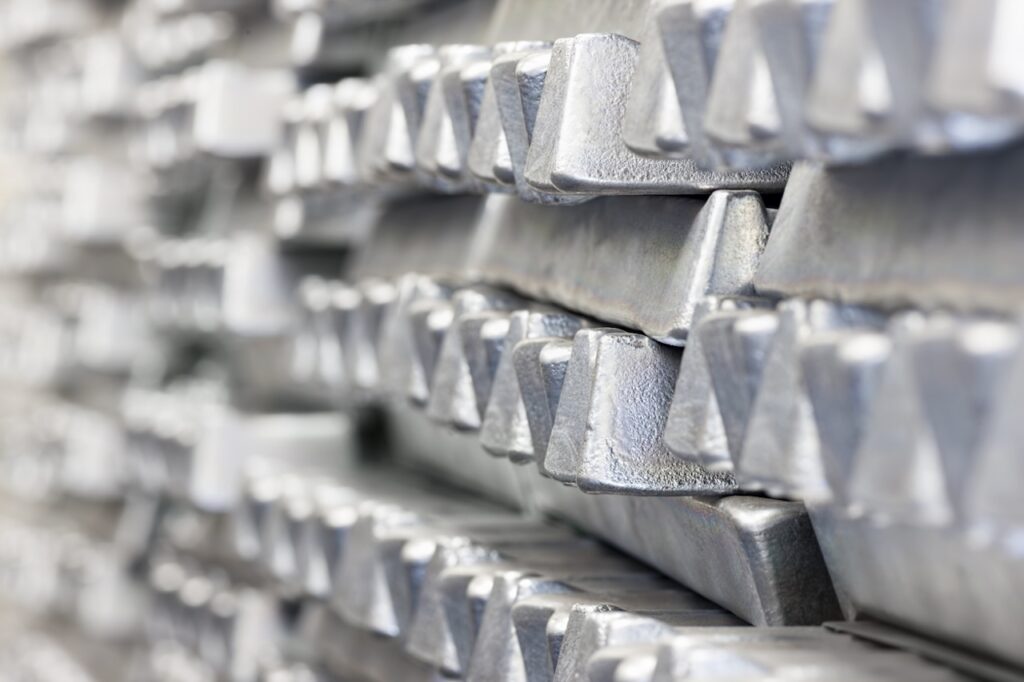
Already operating with one of the lowest carbon footprints in the sector, Aluminium Dunkerque is now going further with a multi-phase decarbonisation roadmap that combines recycling, carbon capture, flexible energy integration and breakthrough technologies. The company’s ambition is to show how legacy industrial sites can be transformed into future-proof, climate-aligned assets – and can offer ideas for the broader aluminium sector.
| KEY FACTS | |
|---|---|
| Official project name | Aluminium Dunkerque |
| Location | Dunkirk, France |
| Project stage | Multi-phase implementation underway |
| Sector | Aluminium |
| Capacity | 285,000 tonnes per year of primary aluminium |
| Key milestones | • 10-year nuclear PPA contract with EDF signed in July 2025 • New recycling furnace inaugurated in May 2025 • 4-year renewable-based PPA contracted with Engie in August 2024 • Carbon capture project expected by 2030 • Expansion project with inert anode technology planned post-2035 |
Project and Company Vision
The ambition is clear: to remain one of the most sustainable aluminium producers globally. Already, in 2024, Aluminium Dunkerque achieved a major milestone in reaching below four tonnes of CO2 equivalent per tonne of aluminium for 100% of its output, which is considered the emission intensity benchmark today in the industry.
Aluminium Dunkerque’s decarbonisation strategy is structured around three major phases:
- Involvement phase (2022–2026): Focused on operational improvements, recycling and targeted investments to reduce direct emissions and improve energy efficiency.
- Carbon capture phase (2026–2030): Deployment of the C4 Capture project in partnership with Rio Tinto, Trimet Aluminium and Fives to pilot and scale carbon capture technologies tailored to aluminium smelting.
- Expansion phase (post-2035): A second potline based on inert anode technology, which eliminates direct CO₂ emissions from the smelting process.
We can’t just stay where we are. We need to continue to progress because our peers are progressing as well.
— Guillaume de Goÿs
CEO of Aluminium Dunkerque
Low-Carbon electricity: A strategic advantage
France’s electricity mix, dominated by nuclear and hydro, gives Aluminium Dunkerque a structural advantage. In 2025, it secured two major Power Purchase Agreements (PPAs): a ten-year contract for nuclear electricity covering 70% of supply, and a four-year flexible contract with Engie, which includes renewables and flexible load management to accommodate solar variability. These provide long-term price and low-carbon certainty, underpinning the smelter’s competitiveness.
The company is also investing in on-site solar panels and battery storage to further increase its flexibility and to test how smelters can integrate with variable renewable generation.
We are not in a low-cost producing region due to the price of energy and workforce. So, we need to build more on one of the strategic advantages we have, which is sustainability.
— Guillaume de Goÿs
CEO of Aluminium Dunkerque
Recycling and circular economy
Historically a producer of only primary aluminium, Aluminium Dunkerque is now integrating recycled content into its products. A new furnace inaugurated in May 2025 can recycle each year 7,000 tonnes of end-of-life aluminium scrap and 13,000 tonnes of internal scrap to produce a further 20,000 tonnes of metal. The rationale is twofold:
- Quality control: The site’s access to large volumes of pure primary aluminium allows it to dilute recycled content on site while maintaining high product quality.
- Customer demand: Automotive OEMs are increasingly requesting recycled content alongside low-carbon aluminium.
Backed by a €1.3 million grant from the French government, covering ~10% of the capital expenditure, the project strengthens the company’s position in a market increasingly driven by circular economy principles.
AI and Big Data: Unlocking efficiency
In 2024, Aluminium Dunkerque partnered with Fives and BCG to apply AI and big data to its anode baking furnace, achieving a 5% reduction in gas consumption, far beyond conventional improvements of less than 1%. The company is now exploring similar applications in potlines including reducing anode effect periods, which generate high-impact perfluorocarbon (PFC) emissions with global warming potential thousands of times higher than CO₂. Tackling these emissions offers a high-impact decarbonisation opportunity.
Carbon Capture: A First-of-Its-Kind initiative
The C4 Capture project is a pioneering effort to apply carbon capture to aluminium smelting, where CO₂ concentrations in flue gases are typically below 1%, posing significant technical challenges. The pilot phase, co-developed with Rio Tinto, Trimet Aluminium and Fives, aims to demonstrate technical feasibility by 2026, with full deployment intended for 2030. Its success will depend on collaboration within the Dunkirk industrial cluster, particularly around infrastructure for carbon transport, and storage. Additionally, the lack of standardised CO₂ quality specifications across the value chain adds further complexity.
The success of the C4 Capture project depends not only on technical feasibility but also on the alignment of multiple stakeholders, each with distinct timelines and requirements.
We need a lot communication and sharing of information to drive alignment in the local CO2 value chain, which in itself is still nascent.
— Guillaume de Goÿs
CEO of Aluminium Dunkerque
Flexibility to accommodate variable power
Aluminium smelters traditionally operate on a stable, baseload electricity supply. Integrating variable renewables like solar and wind requires new approaches. Aluminium Dunkerque has been testing flexibility practices for over a decade, initially for peak shaving and hourly load variation and now progressing into daily load variation to match solar patterns. The next step is battery storage, enabling the site to better align its consumption with renewable generation. These innovations are essential to reduce reliance on fossil-based marginal electricity pricing and to support the broader European energy transition.
Our customers are asking for aluminium with a footprint below 4 tCO2e per tonne. We even recently experienced our first bid for below 3 tCO2e per tonne.
— Guillaume de Goÿs
CEO of Aluminium Dunkerque
Scope 3 Engagement and green premiums
Aluminium Dunkerque is also addressing Scope 3 emissions, particularly from alumina suppliers. It pays a green premium for lower-emission alumina and prioritises sourcing from nearby refineries to reduce transport-related emissions.
While green premiums from customers help offset costs, they are not yet sufficient to cover the full investment needed for decarbonisation. To close this gap, the company has applied for multiple grants from the French state and EU.
Breakthrough innovation ahead
The final phase of Dunkerque’s roadmap is a planned expansion using inert anode technology, which eliminates direct CO₂ emissions. This would entirely eliminate emissions from the smelting process and represent a step-change towards near zero-emissions aluminium. The company has already secured land and grid connection for the expansion. While the technology is still under development, Aluminium Dunkerque is closely monitoring progress from industry leaders like Elysis (JV of Rio Tinto and Alcoa), Arctus Metal and Rusal.
The expansion project is contingent on two critical factors: access to industrial-scale inert anode technology and availability of affordable low-carbon electricity. The company is actively engaging in forums and partnerships to advocate for supportive policies and infrastructure.
Lessons Learned and Scalable Strategies
Dunkerque’s journey offers valuable lessons for heavy industry decarbonisation:
- Partnerships are vital: CCS, for example, depends on close collaboration in industrial clusters – sharing infrastructure and coordinating on regulations and investment.
- Policy support is catalytic: targeted government grants and EU/regional frameworks help close the funding gap and de-risk investment.
- Workforce engagement: By involving employees at all levels, from engineers to shop floor operators, Aluminium Dunkerque has fostered a culture of inclusion that strengthens project implementation and long-term resilience.
- Early action ensures leadership: Staying ahead of peers builds credibility with customers and policymakers.