Holcim OLYMPUS
Holcim’s €400M OLYMPUS project in Greece is building a direct source-to-sink CCS value chain in the Mediterranean to capture 1 Mtpa of CO2 from an isolated cement plant.
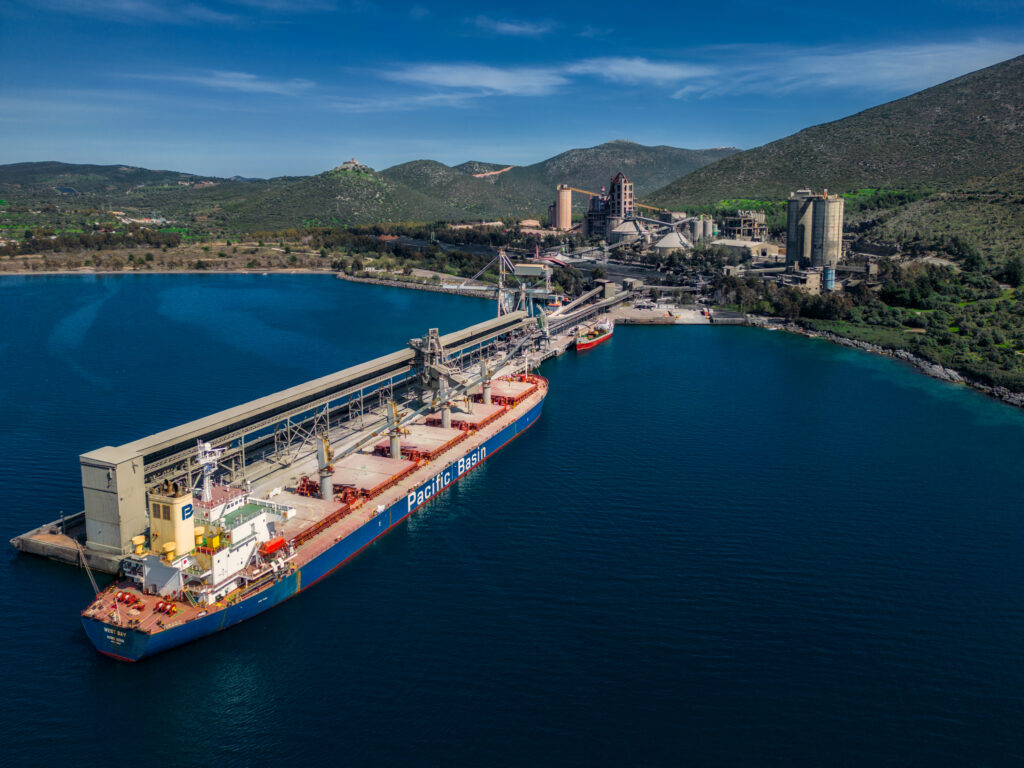
Holcim’s OLYMPUS project is testing a new model for cement decarbonisation in a challenging setting. By building a direct source-to-sink CO2 value chain in the Mediterranean Sea, it is redefining how to tackle regulatory, financial and infrastructure hurdles outside of established industrial clusters.
| KEY FACTS | |
|---|---|
| Official project name | OLYMPUS |
| Location | Milaki, Greece |
| Project stage | Moving towards FID |
| Sector | Cement |
| Total project investment | €400M |
| Capacity | 1 million tonnes per annum (Mtpa) of CO2 captured, 2 Mtpa of near-zero cement |
| Key milestones | • Project first announced in April 2021 • Signed EU Innovation Fund grant in December 2023 • Official Groundbreaking event in May 2025 • Target to be operational end 2029 |
An unparalleled geographical situation
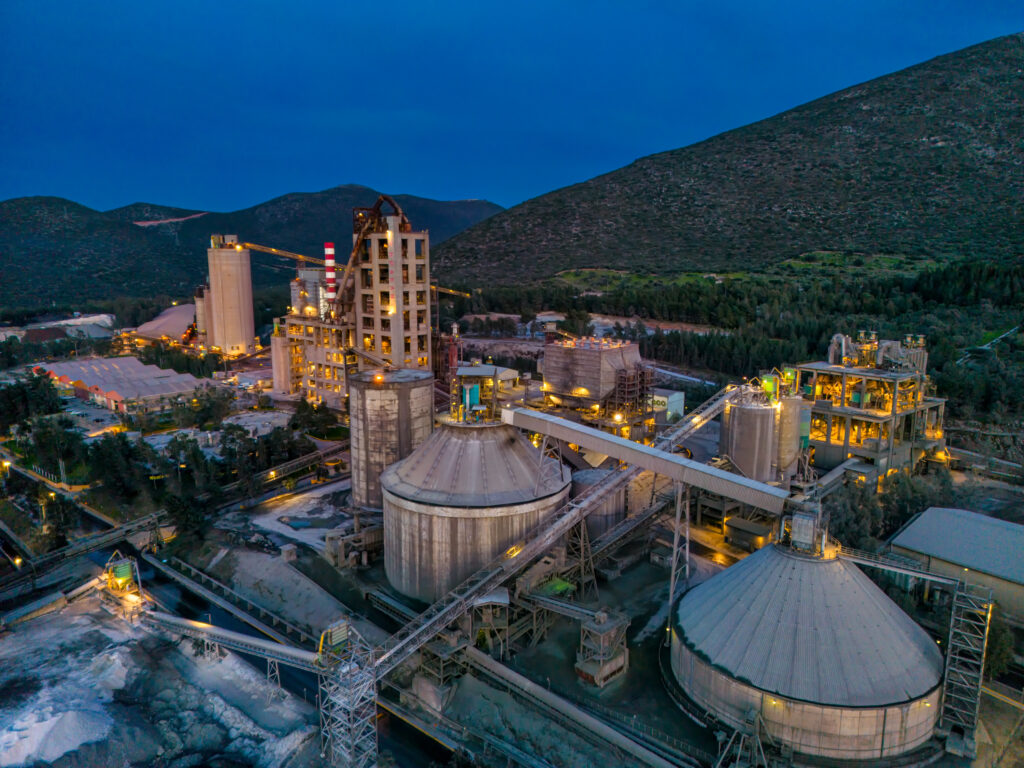
OLYMPUS is one of Holcim’s most advanced CCS projects under development in Europe and a core part of its 2050 net-zero vision. It will capture 1 Mtpa of CO2 from Holcim’s Milaki cement plant in Greece, and store it in the offshore Prinos concession, a depleted oil field.
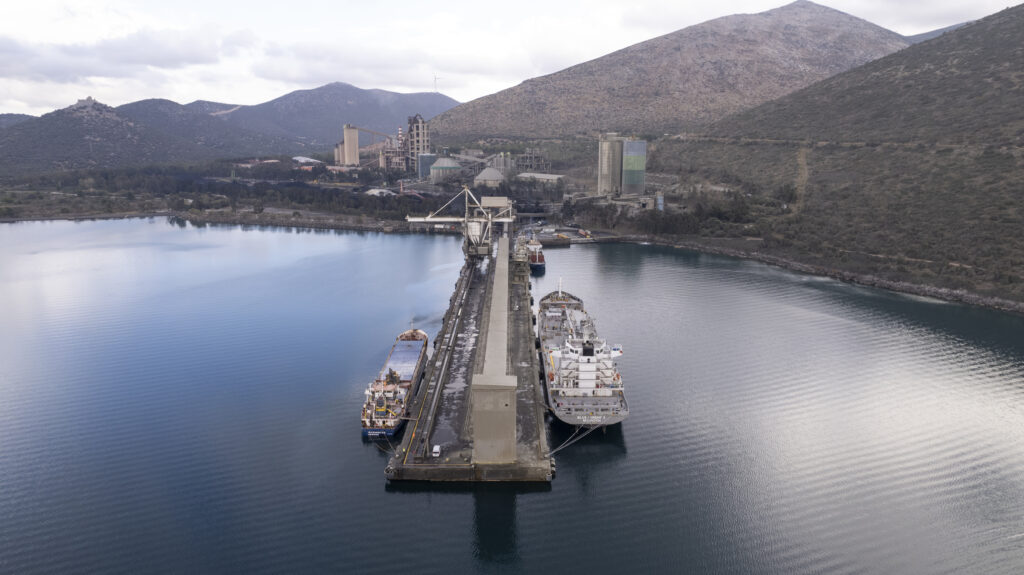
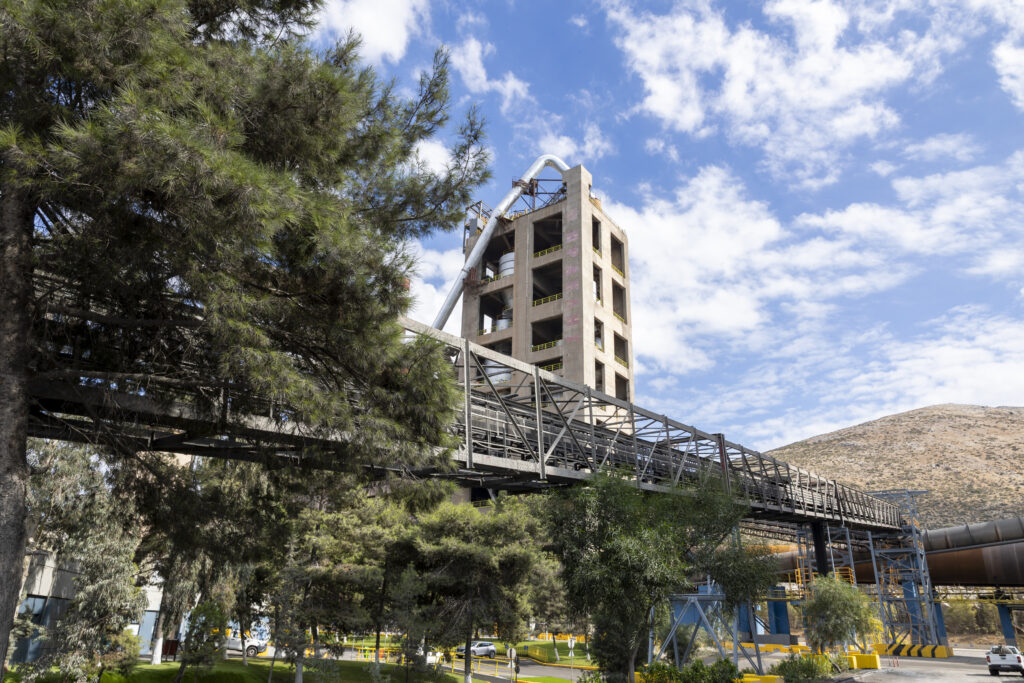
The Milaki plant stands out from its European counterparts, being heavily export-oriented, with an adjacent deep-sea port exclusively operated by Holcim. This infrastructure makes it possible to ship liquified CO2 directly to storage, bypassing the cluster model that most CCS projects rely on. By proving that CCS can work with an isolated plant, OLYMPUS could open pathways for similar projects. The gas flow to be treated from the plant has already more concentrations of CO2 compared to a usual cement plant due its process setup, further boosting the case for a CCS project.
In Europe, we know that only the plants that decarbonise are going to survive.
— Nikolaos Bozos
Holcim Greece CCUS Manager
Challenges facing an isolated plant
Operating outside a cluster poses particular issues. Unlike plants in northern Europe that can reduce costs by sharing CO2 pipelines and oxygen supply, OLYMPUS must create bespoke solutions:
- A dedicated oxygen production unit for oxyfuel capture
- A temporary dedicated temporary liquid CO2 storage unit to at the port terminal
- Integration of oxyfuel and cryogenic capture technologies designed for Milaki’s gas flows
Capturing low-carbon demand and market positioning
The timing of OLYMPUS is fortuitous, aligning with growth in the Greek economy and an expanding construction sector. After a decade of stagnation following the 2008 financial crisis, demand has rebounded since 2019. Major infrastructure projects, including the renovation of Athens airport (the Hellinikon) that will run until 2035 and the construction of new data centres, are driving interest in low-carbon materials.
Upcoming green public procurement rules should also reinforce demand. And Milaki is one of only a few facilities producing oil well cement, a niche but strategically important product. OLYMPUS would make it the only plant globally to offer a low-carbon version and it is already attracting interest from oil service companies such as Schlumberger, Halliburton and Baker Hughes.
Due to the economic context, nobody would have discussed cement CCS 10 years earlier in Greece. Now it is possible because there are growth opportunities and an appetite for green solutions.
— Nikolaos Bozos
Holcim Greece CCUS Manager
Engineering the business case
Securing a €125M grant from the EU Innovation Fund against a total investment cost of €400M in 2023 marked a turning point, confirming confidence in OLYMPUS. But inflation following Europe’s 2022 energy crisis pushed up the total project CAPEX by 30-40%, further challenging the business case.
Holcim has been working on several fronts to close this gap:
- Lowering costs through optimising technology
- Exploring new revenue from carbon dioxide removals
- Leveraging EU policy, such as the Carbon Border Adjustment Mechanism (CBAM), which is due to be introduced in 2026
When CBAM enters into force it will raise costs for traditional cement, but for export-oriented plants like Milaki, competitiveness outside the EU market for a plant without deeply decarbonising technology like CCUS will depend on whether the EU introduces rebates or refunds.
With power representing around 80% of the project operational cost, volatile CO2 and energy prices also add risk. To hedge against this, Holcim is discussing a Carbon Contracts for Difference (CCfD) financing structure with Greek and EU authorities which would stabilise revenues by protecting against swings in the markets.
The price forecast is one thing but it’s difficult for a company to take an FID with such unpredictability in the CO2 market.”
— Nikolaos Bozos
Holcim Greece CCUS Manager
Navigating and shaping regulation
CCS projects face complex regulatory pathways, and OLYMPUS is no exception. Beyond the conventional on-site environmental, building and operational permitting that all projects experience, the value chain requires another dedicated process for the offshore sequestration of CO2 that entails a lengthy consultation period. Greece currently lacks a domestic legal framework for CO2 sequestration, leaving a lack of clarity around legal liabilities between emitters, transporters and storage operators. Holcim is working with other developers and policymakers to accelerate progress, drawing on experience from northern European countries such as the UK, the Netherlands, Norway and Denmark. A collective effort is important – without clear rules, emitters could remain liable for CO2 and potentially face a double penalty to bear their Emissions Trading Systems obligations, the costs of capturing CO2 and the downstream contracts of the non-disrupted party.
We cannot wait and expect the Government to build an entire CO2 legal framework for us.
— Nikolaos Bozos
Holcim Greece CCUS Manager
Advantages of being part of a large group
Running many CCS projects in parallel generates deep subject expertise and learnings that Holcim has been able to capture and OLYMPUS can leverage the group’s experience to advance its project much more rapidly than a classical First-of-a-Kind development. It helps the Milaki team adapt best practice rapidly and keep pace with market trends, policy developments, funding opportunities and latest technologies – vital for a project facing such headwinds. For instance, Holcim has developed a detailed mapping of capture technologies that serves to provide the most suitable solution depending on the plant’s configuration.
Wider benefits
Beyond cutting carbon dioxide emissions, OLYMPUS will deliver further significant environmental and social benefits:
- 60% lower NOx and SOx emissions thanks to flue-gas treatment
- Full wastewater recycling with new withdrawals being covered by desalinated seawater
- Creation of quality local employment and added value to the Greek economy
Looking beyond CCS
Holcim sees the OLYMPUS project as part of a broader decarbonisation strategy. The Milaki plant is planning to increase its use of alternative fuels and decarbonated raw materials. Given the CO2 storage lifetime is estimated to be 15 to 20 years before reaching full capacity, Holcim is already contemplating alternative options to keep the plant’s emissions near zero beyond this date:
- Carbon Capture and Utilisation (CCU) to produce synthetic fuels
- Exporting CO2 for storage either in EU or beyond the EU’s border provided the development of EU legal framework would allow, for example in Egypt
However, regulatory clarity is still needed around for example recognition of CO2 storage beyond EU borders and the use of process CO2 to produce synthetic fuels.
We are in a position to develop synergies to produce for example e-methanol, but we need more maturity from the offtakers.
— Nikolaos Bozos
Holcim Greece CCUS Manager
Lessons for scaling CCS
OLYMPUS demonstrates that CCS in cement does not need to be confined to industrial clusters in northern Europe. By building a direct source-to-sink chain in the Mediterranean, Holcim is directly tackling complex regulatory, financial and infrastructure barriers. Its experience highlights the need for:
- Policy stability to de-risk investments
- Regulatory frameworks that clarify storage liabilities
- Innovative financing tools such as CCfDs
- And business models that demand low-carbon materials
If successful, OLYMPUS would not only decarbonise a Greek cement plant, but could provide a template for deploying CCS in challenging contexts across the world.