Acelen Renewables
The company is establishing a $3 billion “seed to fuel” project in Brazil to produce up to 1 billion litres of Sustainable Aviation Fuel (SAF) yearly from the native macaúba fruit.
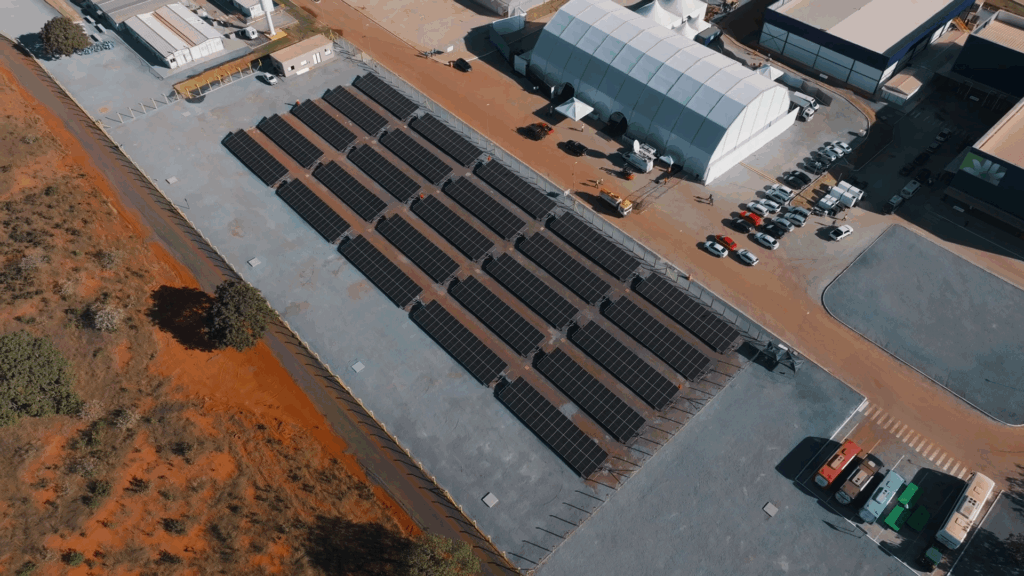
Harnessing the potential of Brazil’s vast degraded lands, Acelen Renewables is proving that a little-known fruit can fuel the future of aviation, building the first “from seed to fuel” large-scale project to turn macaúba into jet fuel for global markets, while providing new opportunities to local communities.
| KEY FACTS | |
|---|---|
| Official project name | Acelen Mataripe Biorefining |
| Location | Bahia, Brazil |
| Project stage | Final Investment Decision (FID) anticipated in late 2025 |
| Sector | Sustainable Aviation Fuel (SAF) |
| Customer | Targeting export markets in Europe and the US for aviation fuel; also engaging domestic airlines and logistics players |
| Capacity | Up to 1 billion litres per year of SAF/HVO (from macaúba) |
| Investment | $3 billion investment (from seed to fuel) fully funded by Mubadala Capital |
| Key milestones | • Acelen Renewables founded in 2023 with Mubadala Capital backing • First farm acquired in March 2025 • Launch of Agripark innovation hub for macaúba R&D (2025) • Partnership with Honeywell for refining technology announced (2024) • Community inclusion programme (Valoriza) launched (2025) • Scale-up plan towards five hubs under development, representing up to $13.5 billion in investment |
Motivation and vision
Brazil has suffered from deforestation for many years. It tops the world in primary tropical forest loss, leading to extensive regions of millions of hectares of degraded land. Acelen Renewables was founded in 2023 with a clear mission: to rehabilitate Brazil’s vast areas of degraded land to create a new source of energy. The company was born out of Mubadala Capital’s desire to contribute meaningfully to future energy systems. Acelen Renewables saw the opportunity to develop macaúba, a hardy native tree, as a feedstock for sustainable aviation fuel (SAF). Macaúba thrives on degraded land – it grows on poor soils, requires little water and does not compete with food crops – so it offers a way to contribute to decarbonising aviation without posing a threat to biodiversity, forests, food security or land use priorities. Additionally, it has a high carbon sequestration potential and through Acelen Renewable’s sustainable crop management, will restore soil quality and foster biodiversity in the areas where it is planted, significantly contributing to restore ecosystems.
With an investment of around US$3 billion, the Mataripe project aims to produce 1.3 million tonnes of SAF each year, positioning Brazil as a significant exporter to markets such as Europe and the US.
From the outset, Acelen Renewables’ leadership recognised that the energy transition would only succeed if it went beyond lowering carbon emissions, to creating new economic opportunities, improving energy security and delivering social benefits – all factors that could serve as a model for the broader bioeconomy in Brazil.
From the very beginning, we were dedicated to carefully modelling this initiative to be systemic and resilient. This project is our commitment to a near future where biodiversity, low carbon fuel solutions, and sustainable socio-economic transformation for the communities, advance hand in hand. Together, we will build a lasting legacy of opportunity, inclusion, and ecological regeneration.
— Maíra Peruzzo
Acelen Renewables, Strategic Affairs Manager
Challenges in implementation
Like other first-of-a-kind projects, the path to implementation has not been simple. The company has faced a series of technical, financial and regulatory hurdles.
- Developing a new crop to be used as feedstock: Although the energy potential of macaúba has been recognised for decades, it had never been cultivated on a large scale. Scaling production required extensive R&D, focused on improving cultivation and breeding practices. To drive this innovation, Acelen Renewables partnered with universities, research institutes, and agricultural experts, while also investing in its own innovation and technology centre, the Agripark, where seedlings are developed and improved to ensure consistent yields and reduce risks for farmers. The company model farm is already operating in Bahia, employing a growing team dedicated to macaúba cultivation.
- Financing and risk: Funded by Mubadala Capital, Acelen Renewables also applied for national and international support for the project, they found financial institutions are not used to projects focused on the bioeconomy. Building investor confidence required evidence that the risks could be managed and that the project would be commercially viable.
- Certification and market access: SAF must meet strict international certification standards. This process is technically demanding and time-consuming, often requiring years of evidence and auditing. Acelen Renewables began this process early, ensuring its SAF is traceable and compliant from seedling to jet engine.
- Building a social model: Communities in regions of degraded land frequently experience structural barriers to employment and income generation. Through the Acelen Valoriza programme, 20% of the total 180 thousand hectares of the cultivation areas, are going to be cultivated in partnership with smallholder farmers, who receive seedlings, training and guaranteed buyers, enabling them to diversify their income and achieve greater financial stability. Careful planning and legal structuring were required to protect participants and foster trust with local communities.
Given the global demand, the sector thrives on diverse suppliers. By strengthening bilateral dialogue, advancing international collaboration, and promoting a shared understanding of science, we can ensure that every project contributes to a stronger, fairer, and truly sustainable future.
— Maíra Peruzzo
Acelen Renewables, Strategic Affairs Manager
Lessons learnt
Amid these complexities, Acelen Renewable’s experience provides valuable lessons for future bioeconomy projects:
- Financial resilience requires a global vision: Targeting European and US markets has been central to the company’s business model. Both regions have clear mandates for sustainable aviation fuel (SAF), guaranteeing demand. This focus on exports guarantees economic viability, despite the high initial investment. Achieving “fossil parity” – producing SAF at the same price as conventional jet kerosene – removes one of the biggest barriers to SAF adoption worldwide.
- Social benefits strengthen long-term viability: The Valoriza programme has demonstrated that engaging local communities can transform a technical project into a broader catalyst for development. Smallholders gain new income, training, and knowledge transfer. Linking local families’ livelihoods directly to the success of the SAF project, Acelen Renewables creates shared value and strengthens resilience, both of the project and the surrounding communities.
- Innovation thrives on collaboration: Partnerships with universities, research centres and technology companies such as Honeywell have been critical for improving seedlings and ensuring the fuel meets international standards. Innovation in the bioeconomy depends on such ecosystems of partners, each contributing their own area of expertise.
- Broader sustainability attracts broader support: By going beyond environmental factors to include social and economic benefits, Acelen Renewables has attracted support from investors, governments, and local communities. This integrated approach strengthens the project, combining environmental, social, and economic benefits into a more resilient and lasting value generation.
We have built a robust and integrated ecosystem comprised of a highly qualified team and experienced partners. Through this, we will provide the world with a viable and innovative solution for renewable fuels, sustainable from end to end.” “We will produce sustainable fuel on a global scale, inserting Brazil in the development of the international sustainable chain.”
— Luiz de Mendonça
CEO, Acelen Renewables
As it moves towards final investment decision, Acelen Renewables continues to deepen its scientific research to unlock the full potential of the macaúba fruit and is planning the scale-up of this project, with a possible $15 billion investment, for the roll-out to five hubs.