CISRI Linyi
CISRI’s Linyi project is an industrial-scale pure-hydrogen direct reduced iron (DRI) plant in Shandong, China — a world-first demonstration proving near-zero-carbon steelmaking and already seeding a wave of commercial-scale green steel projects.
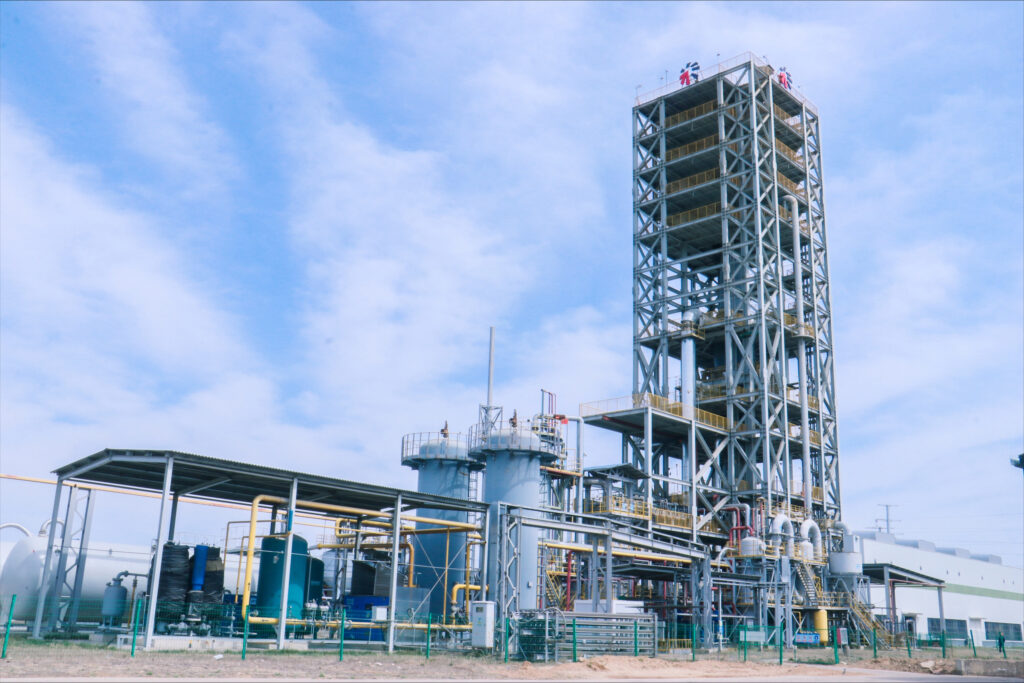
CISRI’s Linyi project in Shandong Province represents one of the most significant breakthroughs in global iron and steel decarbonisation. As an industrial-scale pure hydrogen direct reduced iron (DRI) facility, the project demonstrates China’s ambition to leapfrog to near-zero carbon metallurgy by combining long-term research, abundant renewable energy (RE) resources, and state-backed industrial innovation.
| KEY FACTS | |
|---|---|
| Official project name | CISRI Linyi Pure Hydrogen Metallurgy Demonstration Project |
| Location | Linyi, Shandong Province, China |
| Project stage | Operating (pilot / demonstration) |
| Sector | Iron & steel (direct reduced iron – DRI) |
| Capacity | 50,000 tonnes per year (pilot-scale) |
| Technology | 100% hydrogen-based shaft furnace reduction |
| Hydrogen source | Green hydrogen + on-site recycling (75% internal recycle rate) |
| Electricity | 100% green power supply from State Grid partnerships |
| Owner / developer | China Iron & Steel Research Institute Group (CISRI) |
The plant marks a transition from laboratory-scale hydrogen reduction experiments to real-world operational proof. Its lessons are already accelerating a wave of commercial-scale pure hydrogen DRI projects across China, positioning the country as a global leader in next generation green steelmaking.
About CISRI
The China Iron & Steel Research Institute Group (CISRI) is a national research institute and state-owned enterprise in China, overseen by the central State-owned Assets Supervision and Administration Commission (SASAC). It has been conducting research on pure hydrogen metallurgy for more than 20 years, developing the technological foundations that enabled the Linyi pilot plant.
Why Linyi, and why now
China accounts for over half of global steel output, with the sector heavily reliant on coal-based Blast Furnace – Basic Oxygen Furnace (BF-BOF) production. Decarbonising steel has therefore become central to achieving China’s 2030 peak emissions and 2060 carbon neutrality goals.
As the second most industrialised province in China, the pure hydrogen DRI demonstration plant was strategically commissioned in Linyi, Shandong. It provides an ideal location to showcase a world-first technology to downstream users, regulators, and future investors.
CISRI had already spent 20 years developing pure hydrogen metallurgy. By 2020, the technology foundation was mature, green hydrogen was becoming more affordable, and demand was rising for higher-end quality steel products that hydrogen reduction enables. The time was right to move from theory to demonstration.
Technology innovation and performance
The Linyi plant is fully optimised for 100% hydrogen reduction and no blending with syngas or natural gas is possible. The pilot tests have demonstrated some unique technical features:
- Electric heating of the process gas using green electricity.
- Hydrogen reduction is 5× faster than with carbon-based gases.
- Can process virtually all iron ore grades, offering new feedstock flexibility.
- Achieves a ~5% higher metallisation rate than conventional DRI.
- The process has achieved up to 15% lower energy consumption than with carbon-based gases.
- The design includes a recycling loop that prevents any hydrogen losses.
The facility also implements 100% automated operation and incorporates advanced AI-assisted process control to enhance hydrogen safety, optimise heating, and support digital twin development.
A non-commercial pilot with commercial implications
Although the Linyi facility has a nominal capacity of 50 ktpa, it is not used commercially. Instead, it functions as an R&D and validation platform. It has successfully tested different ore grades to measure hydrogen consumption and evaluated DRI quality for downstream applications. The pilot has also allowed stress testing equipment durability in high temperature hydrogen environments while refining process automation and safety systems.
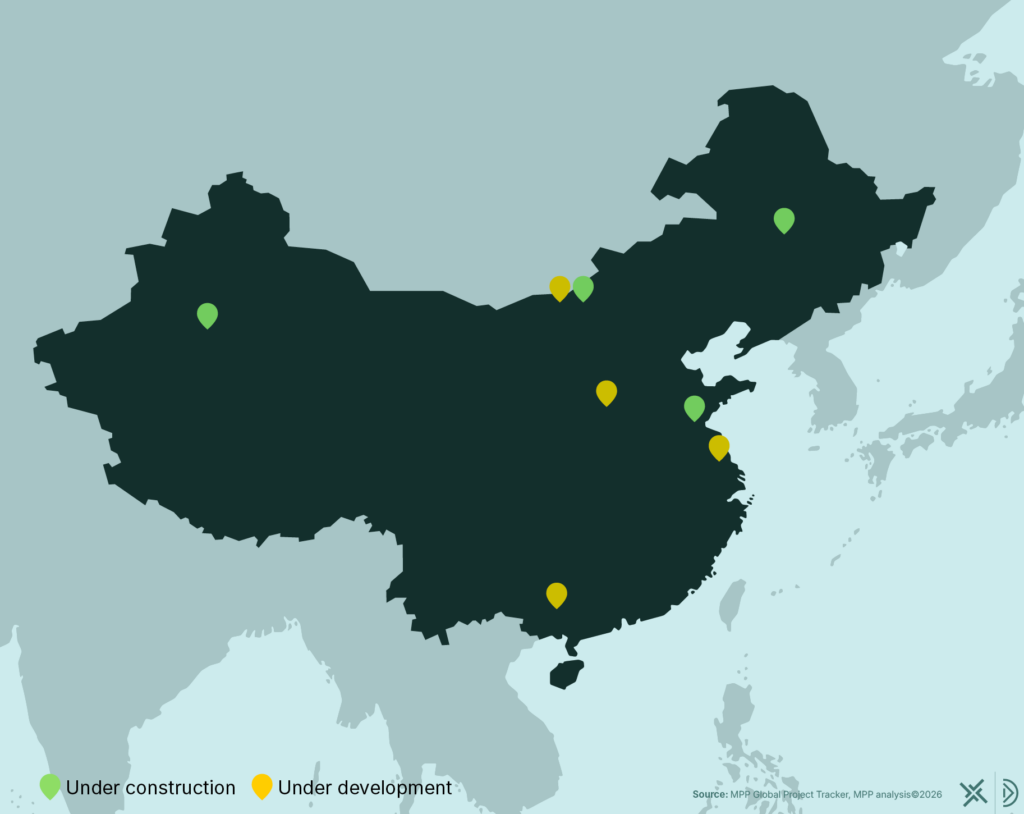
These results are now feeding directly into a wave of commercial scale projects, four of which already under construction:
- One 300 ktpa plant in Songyuan (wind-powered)
- Two lines of 600 ktpa each in Baotou, Inner Mongolia
- Two plants in Xinjiang, one of 300 ktpa and one of 1,200 ktpa
Four more are under development:
- One 1,200 ktpa plant in Jiangsu
- One 1,000 ktpa plant in Guangxi
- One 500 ktpa plant in Baotou, Inner Mongolia (joint project with Baotou Steel)
- One 600 ktpa plant in Shanxi
All of these projects plan to use 100% green hydrogen. China is now on track to develop a globally scalable pure hydrogen green steel industry, built on CISRI’s Linyi experience.
Lessons from Linyi: Collaboration and supply chain partnerships
Delivering the Linyi project required deep collaboration across China’s industrial system:
- National and local state grid authorities to guarantee renewable electricity supply.
- Hydrogen producers to ensure consistent hydrogen availability.
- EPC subsidiaries of CISRI to deliver engineering, construction, and commissioning.
- Downstream steel users to secure product offtake, especially with high-end manufacturers.
- Local & national governments for permitting, policy support and renewable energy access.
Because China’s steel sector faces overcapacity, offtakers are generally reluctant to coinvest. However, for high-end steel grades enabled by pure hydrogen metallurgy, CISRI is engaging select customers earlier in the project lifecycle. In fact, DRI provides a much cleaner metallic input than conventional scrap, with lower levels of tramp elements and impurities. Carbon-free DRI produced via hydrogen metallurgy offers additional intrinsic advantages, particularly for the manufacture of higher-end and special products such as automotive steel, tool and die steels, superalloys, stainless steel and electromagnetic materials.
Economic and policy context
Pure hydrogen metallurgy is becoming cost competitive in China, largely due to very low-cost of green electricity. Green power in China has reached average costs as low as 0.1 RMB/kWh (i.e. ~15 USD/MWh). Other driving factors include increasing scale in renewable hydrogen, solid in-house engineering and fabrication capacities and strong policy alignment with national decarbonisation targets. Impressively, the commercial-scale projects using Linyi technology expect to be able to produce green iron and steel at roughly the same price as BF-BOF production.
A significant challenge emerged in late 2025 with a draft capacity swap regulation, requiring new steel capacities to be offset by shutting down older BF–BOF capacities. The policy, not enforced yet, aims to contain domestic steel overcapacity. For organisations like CISRI that do not own and operate BF-BOF capacities, it creates major uncertainties. This may slow new greenfield approvals, though projects already under construction remain unaffected.
Challenges and lessons learned
Technology scale-up challenges
- Translating lab results to industrial reality required years of trial and error.
- High temperature hydrogen presents material degradation and safety risks, requiring new furnace designs.
- Hydrogen heating technology needed custom engineering solutions.
Funding and financial staging
- CISRI invested in batches to prioritise core equipment and technology development.
- Some downstream processing and infrastructure was deferred to reduce risk.
Scaling adoption
- Clear government support for green power is essential.
- Policies must adapt to encourage green steel capacity.
- Knowledge retention is strategic: CISRI will build but not license the technology internationally, transferring operations only after commissioning. It aims to scale its impact by deploying commercial projects globally and to partner with local companies and/or government to operate them.
- All new commercial projects include AI-driven furnace control and continuous optimisation.
Looking ahead
The Linyi project represents a turning point for both China’s and the world’s steel industry. CISRI is demonstrating that pure hydrogen metallurgy can be technically viable, cost competitive under China’s renewable energy conditions, and scalable with more than 4 Mtpa of capacity already under development.
By combining abundant renewables, state-backed innovation, strong EPC capabilities, and a fast-growing domestic technology base, China is rapidly positioning itself as the global epicentre of near zero carbon iron-making.